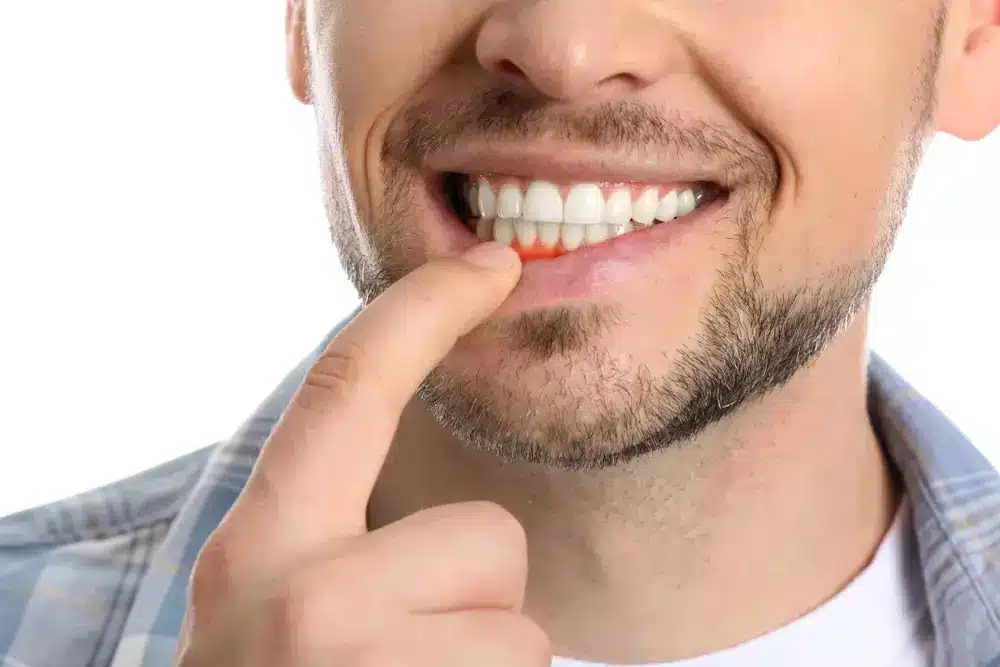
Walk down any drugstore aisle, and you’ll find more whitening products than you know what to do with. Strips, trays, pens, toothpastes, and LED kits. The prices range from under ten dollars to over a hundred. So when professional whitening at a dental office costs several hundred dollars, it’s reasonable to stop and ask whether you’re getting something meaningfully different or just paying for the clinic’s overhead.
Here’s an honest comparison.
How Professional Whitening Works
Professional teeth whitening uses a higher concentration of hydrogen peroxide or carbamide peroxide than anything available over the counter. In Canada, the maximum concentration sold without a dental prescription is significantly lower than what a dentist can apply in-office.
Higher concentration means faster, more dramatic results in a single session. An in-office whitening appointment at Meadowleaf Dental typically produces several shades of improvement in about an hour. The gel is carefully applied to the teeth with the gum tissue protected to reduce irritation.
The other professional option is custom take-home trays. These are made from impressions of your teeth, so they fit precisely against every tooth surface without the gaps that over-the-counter trays have. The gel used in custom trays is still stronger than drugstore products, and because the trays fit properly, the gel stays on the teeth rather than seeping around and irritating the gums.
What Over-the-Counter Products Can Realistically Do
Over-the-counter whitening strips work. That’s worth saying plainly. For mild surface staining, patients who use them consistently over two to four weeks will see improvement. The whitening won’t be as fast or as dramatic as professional treatment, and the results tend to fade more quickly, but they’re not ineffective.
The limitations are more about precision and concentration than anything else. The strips can’t reach between teeth as well as a custom tray does. The concentration is capped by regulation. And because strip size is standardized, they don’t fit every mouth the same way, which means some tooth surfaces get more exposure than others.
Whitening toothpastes work primarily by polishing surface stains rather than bleaching. They don’t change the underlying shade of the teeth. They maintain whiteness after bleaching treatment, but are not a substitute for it.
Which Type of Staining Responds to Whitening
This matters before spending money on any whitening product.
Extrinsic staining, which sits on or just below the enamel surface from coffee, tea, red wine, and tobacco, responds well to both professional and over-the-counter whitening. This is the most common type and the primary target for whitening products of any kind.
Intrinsic staining is a different situation. Discoloration from certain antibiotics taken during tooth development, fluorosis, or trauma to the tooth is inside the tooth structure itself. Bleaching has a limited effect on intrinsic staining. In these cases, veneers or bonding are typically more effective options for changing the colour.
Age-related darkening, where teeth gradually yellow over decades, falls somewhere in between. Professional whitening addresses it better than at-home products, but the response varies depending on the individual.
If you’re unsure what type of staining you have, a check-up at Meadowleaf Dental gives the dentist a chance to assess this before you invest in whitening that may not target the right cause.
The Sensitivity Question
Both professional and at-home whitening can cause temporary tooth sensitivity. The higher the peroxide concentration, the more likely it is to occur during or after treatment.
A few things that affect this:
- Patients with existing sensitivity tend to experience more whitening-related sensitivity
- In-office treatment allows the dentist to monitor the process and stop if sensitivity is significant
- Custom trays with lower concentration gel used over a longer period are often better tolerated by sensitive patients than in-office high-concentration treatment
- Sensitivity from whitening is temporary and typically settles within a day or two
At Meadowleaf Dental, the team discusses sensitivity history before recommending a whitening approach and can adjust the protocol accordingly.
The Honest Cost Comparison
Over-the-counter strips run roughly $40 to $80 for a course of treatment that takes two to four weeks and may need repeating every few months to maintain results. Professional in-office whitening costs more upfront but produces better results faster and typically lasts longer.
Custom take-home trays from a dentist sit in the middle. The initial cost includes the tray fabrication, but the trays last for years, and only the gel needs to be repurchased for future touch-ups. Over a few years, this often works out to a lower per-use cost than repeated courses of strips.
For patients who want a meaningful change in shade rather than a subtle improvement, professional whitening or custom trays are the practical choice. For patients with mild staining who want low-cost maintenance, quality drugstore strips are a reasonable option to discuss with your dentist.
Book a Whitening Consultation at Meadowleaf Dental in Edmonton
If you’re considering whitening and want to understand which option suits your teeth, the team at Meadowleaf Dental can assess your current shade, check for intrinsic staining, and recommend the approach that makes sense for your situation.
Meadowleaf Dental offers teeth whitening as part of its full range of cosmetic dentistry services in Edmonton. The clinic accepts most insurance plans with direct billing, and Saturday appointments are available.