
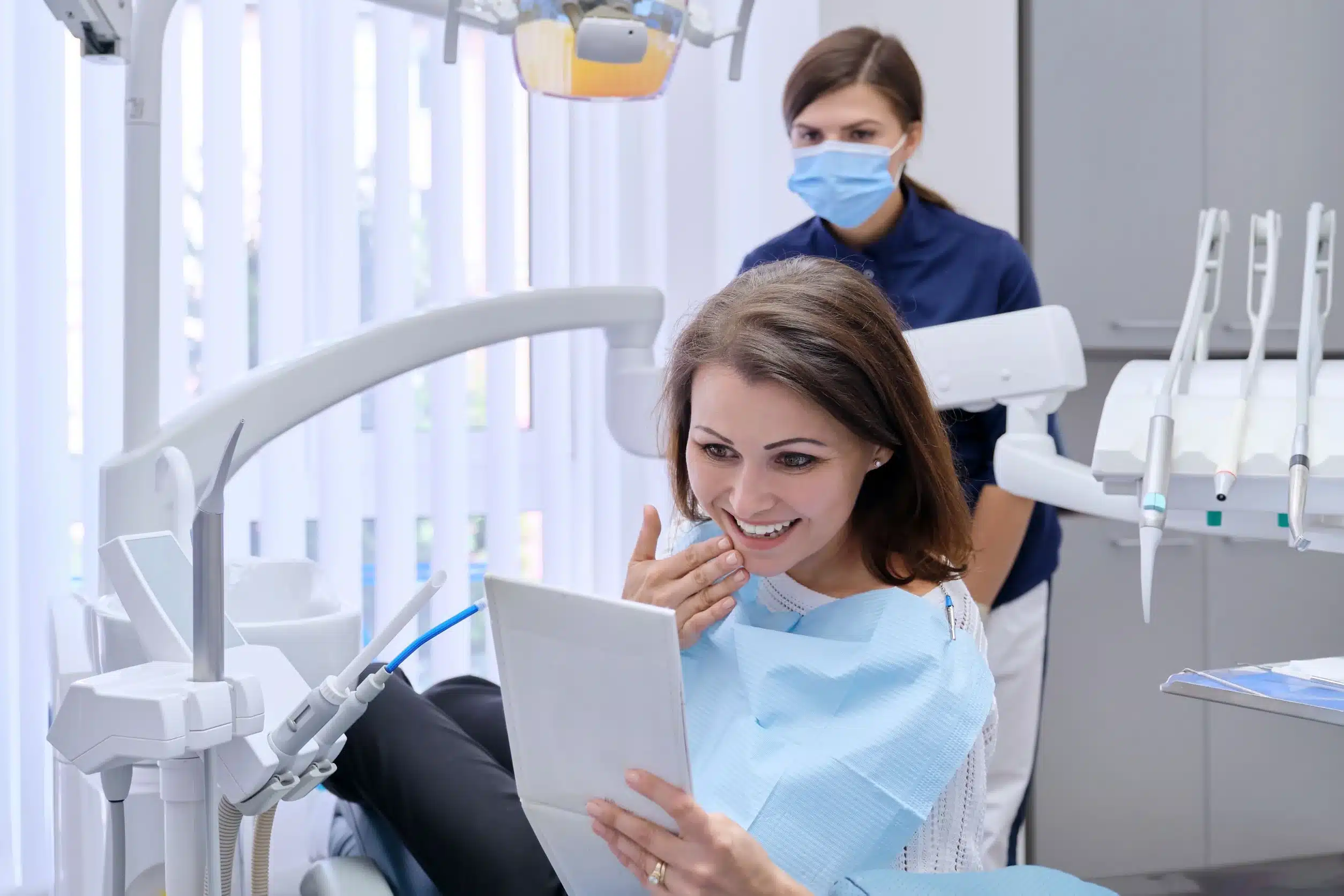
Dental implants suit many adults who are missing teeth. A consultation is the best way to find out whether they suit you.
Dental implants can be a good option for adults with healthy gums, enough jawbone, and good general health. At a consultation, your dentist will review your medical and dental history, look at your gums and bite, and usually take X-rays to see the bone under the missing tooth. Your dentist can often treat concerns first, so many people can still move ahead with implants after some preparation.
Dr. Rahim Ali, a general dentist here, focuses on restorative dentistry, including implant-retained crowns. He also has a special interest in caring for patients who feel anxious about dental visits. Our dental implant service starts with a conversation about your goals, so you can ask questions before any decisions come up.
Key takeaways if you are considering an implant
- A consultation covers four areas: your health history, the spaces where teeth are missing, your gum and jaw health, and your goals.
- X-rays show how much bone sits under the gap, which helps your dentist plan the next steps.
- Your dentist can usually treat gum disease first, and implant planning can continue once your gums are healthy.
- Implants usually wait until the jaw has finished growing, which tends to happen in the late teens.
- You can bring your questions about cost and timing to the first visit.
What does an implant consultation check?
Your dentist will start by listening. We ask about your goals, your health history, and any medications you take. Then your dentist examines the area of the missing tooth, the teeth beside it, and any crowns or fillings already in place.
Next comes a look at your gums and jaw. Digital X-rays show the bone under the gap, and your dentist will explain what they see in plain language. The review also covers how your teeth meet, because a comfortable bite helps an implant last.
Finally, your dentist will go over your options. Implants are one choice among several. When it suits you, we also describe how implants compare to bridges and dentures, so you can weigh each one calmly. The first visit carries no pressure to decide that day, and you can take the time you need. Our appointments are unhurried, so there is room for every question you bring with you.
How gum health affects implant planning
Gum disease can affect implant planning, but it often does not stop implants from being an option. Healthy gums help hold an implant in place over the long term. Your dentist may recommend treating gum disease first, and once your gums are healthy, planning can move forward.
Signs of gum disease include bleeding when you brush, red or swollen gums, and gums that pull away from your teeth. You do not need to diagnose this yourself. Your dentist will check your gums during the exam.
If treatment helps, we can plan it before you move on to the implant.
Is there such a thing as not having enough jawbone?
Yes, bone can be a factor. When a tooth has been missing for a while, the bone in that spot can slowly shrink. An implant needs enough bone to hold it steady, and your X-rays help your dentist judge that.
If the bone looks thin, your dentist will explain your options. These may include building up the bone before an implant, or choosing a different way to replace the tooth. Either way, you will have the full picture before you make a choice.
The longer a gap has been there, the more useful it is to ask about bone early. A conversation does not commit you to anything, and it gives you information you can use whenever you are ready.
Do age and general health matter?
Age alone is rarely the deciding factor in whether implants suit you. Many adults of all ages receive implants, and healthy older adults are often good candidates. Teenagers usually wait until the jaw finishes growing, which your dentist can discuss with you.
Health tends to matter more than age. Well-managed diabetes, smoking, certain medications that affect bone, and teeth grinding can all influence healing or how long an implant lasts. Your dentist will typically ask about each one.
Some of these may mean waiting or adding a step rather than saying no. For example, a patient who grinds at night may receive a night guard to protect the new tooth. Sharing your full health history helps us plan safely and calmly.
How planning differs from a bridge or a denture
Each option has its own checklist. A bridge relies on the healthy teeth on either side of the gap, so the condition of those teeth matters. A partial denture clips onto your natural teeth and does not depend on jawbone in the same way. An implant depends most on bone and gum health.
That is why a consultation compares more than one choice. You can read more about partial dentures before your visit, and our team will explain how they differ from an implant for your particular gap. We lay out the steps, the timing, and the upkeep of each option in everyday language.
Here is how the three options tend to differ.
- An implant depends mostly on healthy gums and enough jawbone.
- A bridge depends on the condition of the teeth beside the gap.
- A partial denture is removable and clips onto natural teeth.
Your dentist recommends, and you decide. If cost or comfort points you toward a different option than an implant, that is a perfectly good outcome, and we will plan it with the same care.
What if implants are not the right fit yet?
Needing more preparation is not the same as hearing no. Your dentist may suggest treating gum disease, restoring a nearby tooth, or building up bone first. For some patients, a bridge or a partial denture turns out to be a better match. Others return for implants after a few months of preparation.
Dr. Ali and our team can map out those steps with you, so you know what comes first and what comes next. Planning ahead often makes the whole process feel more manageable. You can return to the conversation whenever you are ready, whether that is next month or next year.
Cost often comes up at this stage. Dental implants fall outside the Canadian Dental Care Plan, and we accept most insurance plans with direct billing whenever possible. Our team can go over what your benefits may cover before you decide.
Booking an implant consultation in The Meadows
Our office at 3908 17 St NW offers appointments on Saturdays from 9 a.m. to 3 p.m., which works well when a weekday is hard to spare. Patients from The Meadows, Tamarack, and Wild Rose can book a weekend visit with family nearby.
If a missing tooth has been on your mind, we would be happy to meet you. The team at Meadowleaf Dental can take you through each step of an implant consultation at an unhurried pace.
Call (780) 485-2911 or book online to arrange your consultation with Dr. Ali.
