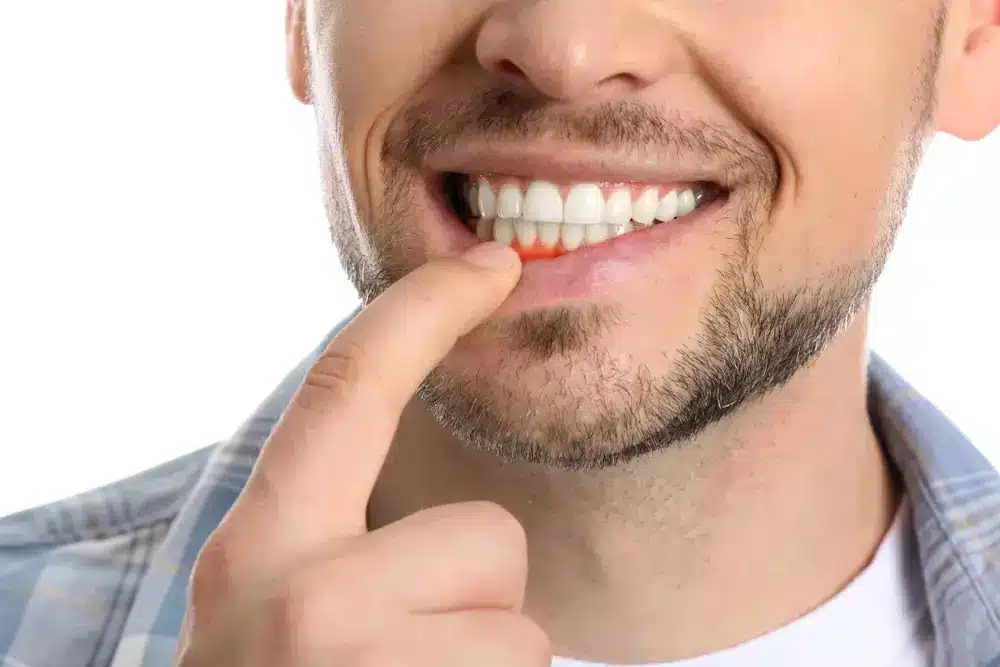
Something has changed in how patients talk about certain dental procedures. Soft tissue treatments that used to mean days of recovery and suture removal appointments are increasingly being completed with minimal downtime. Gum recontouring that once required a scalpel is being done with a tool that seals as it works. The shift isn’t accidental. Laser dentistry has been refining what’s possible for soft tissue treatment over the past two decades, and patient experience is noticeably different as a result.
Understanding what the technology actually does, and why it produces a different outcome than conventional approaches, makes the choice much clearer.
What a Dental Laser Does Differently
A dental laser delivers focused light energy at a wavelength calibrated to interact with specific tissue. For soft tissue applications, which represent most of what laser dentistry handles in a general dental setting, the beam ablates tissue by vaporizing the water content of the cells it contacts. As it removes tissue, it simultaneously seals blood vessels and has a bactericidal effect on the area.
The practical consequences: less bleeding during the procedure, reduced post-operative swelling, minimal need for sutures in most soft tissue cases, and a lower risk of infection at the treatment site. These aren’t incidental benefits. They follow directly from how the laser interacts with tissue compared to a conventional scalpel.
Patients notice the difference most in recovery. A soft tissue procedure performed with a laser typically produces less post-procedure swelling and discomfort than the equivalent procedure performed with conventional cutting, and the absence of sutures means no follow-up appointment just for removal.
What Laser Dentistry Is Used for at Meadowleaf Dental
At Meadowleaf Dental in Southeast Edmonton, laser dentistry is offered as part of the advanced and specialty dentistry services at the clinic. The team uses laser technology across a range of soft tissue applications.
Gum tissue contouring and reshaping. When the gumline needs to be adjusted, whether for aesthetic reasons before a cosmetic procedure or to improve access for a restoration, the laser removes and reshapes the tissue precisely. The sealed edges heal without sutures and typically recover faster than conventionally treated tissue.
Periodontal pocket treatment. In patients with gum disease, bacteria accumulate in pockets between the gum and the tooth root. The laser can be directed into these pockets to reduce bacterial load and remove diseased tissue without incising the surrounding healthy tissue. This is used alongside scaling and root planing as part of a comprehensive periodontal approach.
Treatment of canker sores and oral ulcers. Low-level laser applied to an active ulcer reduces pain and can shorten healing time. The treatment takes only a few minutes and has no meaningful recovery requirement.
Exposure of unerupted or partially covered teeth. Laser tissue removal allows impacted or partially erupted teeth to be exposed for orthodontic treatment or natural eruption without the need for sutures.
Frenectomy. Releasing a tight frenum, the tissue connecting the lip or tongue to the gum or floor of the mouth, is one of the more common laser applications. No stitches are needed, and the site heals quickly. This is relevant for both children and adults, including infants with lip or tongue ties.
Why Patients Are Asking About It More Often
Patient awareness of laser dentistry has grown partly through experience and partly through conversation. Patients who have had a laser-assisted procedure and then needed a similar procedure at a practice without the technology notice the difference in how they feel afterward. That comparison travels.
There’s also a subset of patients for whom the conventional version of certain procedures has historically been a barrier. The reduced bleeding, reduced recovery, and absence of sutures lower the threshold for agreeing to soft tissue treatment that genuinely needed to happen but kept getting deferred. In these cases, laser technology isn’t just a convenience. It’s what makes treatment happen at all.
For patients with dental anxiety, the absence of cutting and suturing changes the psychological experience of the procedure meaningfully. Dr. Rahim Ali at Meadowleaf Dental has a specific interest in treating patients with high dental anxiety and is certified in sedation dentistry in Edmonton. For patients who want both sedation and a laser-assisted approach, those options work alongside each other.
Is Laser Dentistry Right for Every Procedure?
No, and it’s worth being straightforward about this. Laser dentistry is well-suited for soft tissue procedures, and some specific hard tissue applications exist as well. It doesn’t replace every conventional approach. For many restorative and surgical procedures, traditional instruments remain the standard. The clinical team assesses which approach is appropriate for each patient’s specific situation rather than applying laser treatment universally.
If you’ve been told you need a soft tissue procedure and are curious whether a laser-assisted approach is available for your situation, it’s a direct question worth raising at your appointment.
Book Your Appointment at Meadowleaf Dental, Southeast Edmonton
Meadowleaf Dental is at 3908 17 St NW in The Meadows, Southeast Edmonton. The clinic accepts CDCP and direct bills most insurance plans. Saturday appointments are also available. Call our Edmonton dentist (780) 485-2911 to book or ask about laser dentistry options.